Construction of the new Kirchfeld groundwater pumping station, Emmen
GEOTEST AG has been providing hydrogeological support for the Kirchfeld GWPW project since 2007. For almost two decades, GEOTEST has provided technical support to Emmen Water Supply in the step-by-step development of this key infrastructure project – from initial investigations to the current implementation.
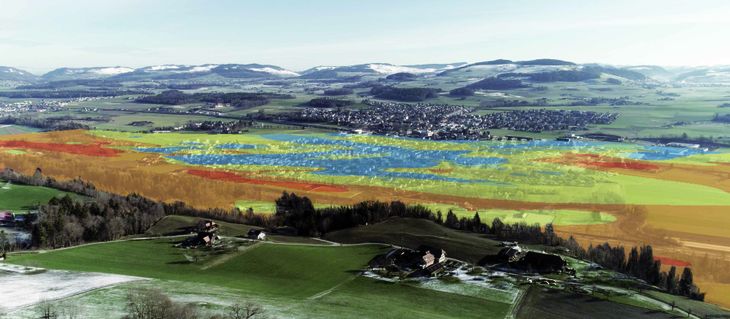
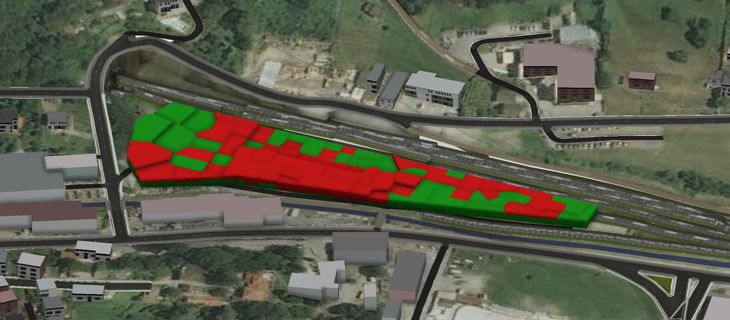
GEOTEST’s services have included extensive hydrogeological investigations, including field surveys, geoelectric measurements, probing and drilling work, pumping tests, tracer tests and laboratory analyses. On this basis, GEOTEST prepared the necessary hydrogeological reports, inflow area analyses, and groundwater models, which served as the foundation for decisions regarding site selection, well concept development, and protection zone demarcation.
Replacement of the Stichermatt pumping station
The future Kirchfeld groundwater pumping station, with its two new large-scale filter wells, will replace the existing Stichermatt GWPW. The latter is currently situated in the middle of a residential area and no longer complies with the applicable water protection regulations of Canton Lucerne. The Stichermatt pumping station will be decommissioned by order of the Canton as soon as the new Kirchfeld GWPW is ready for operation.
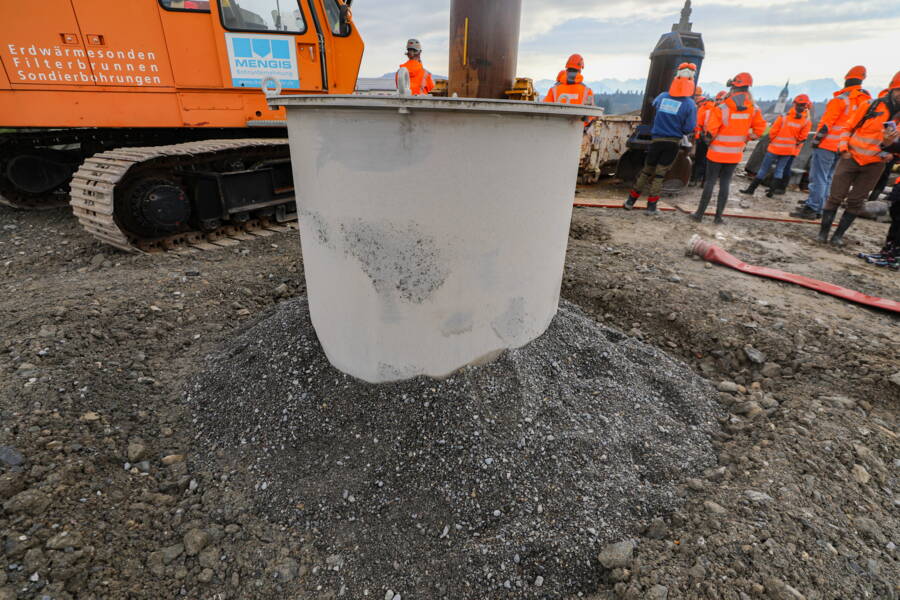
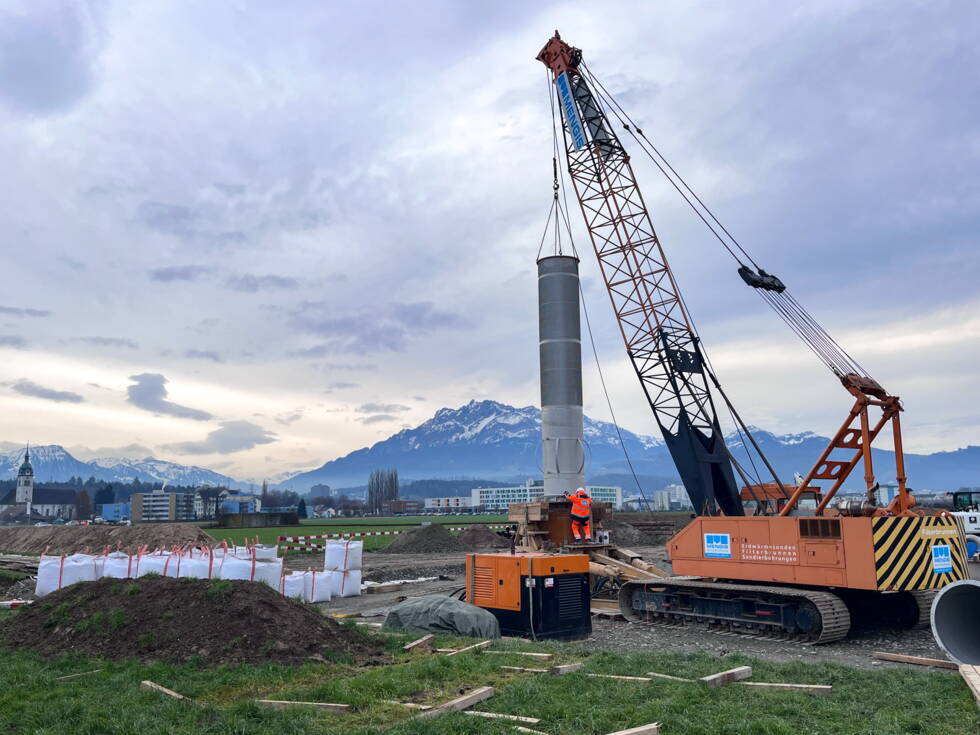
The first of the two wells is already in place and ready for well development (desanding).
From planning to implementation
Following intensive investigations, planning work and negotiations with landowners, the project has been in the implementation phase since 2025. GEOTEST was responsible for the dimensioning of the filter wells and the protection zones, and it contributed decisively to the technical supervision of the approval and licencing procedures.
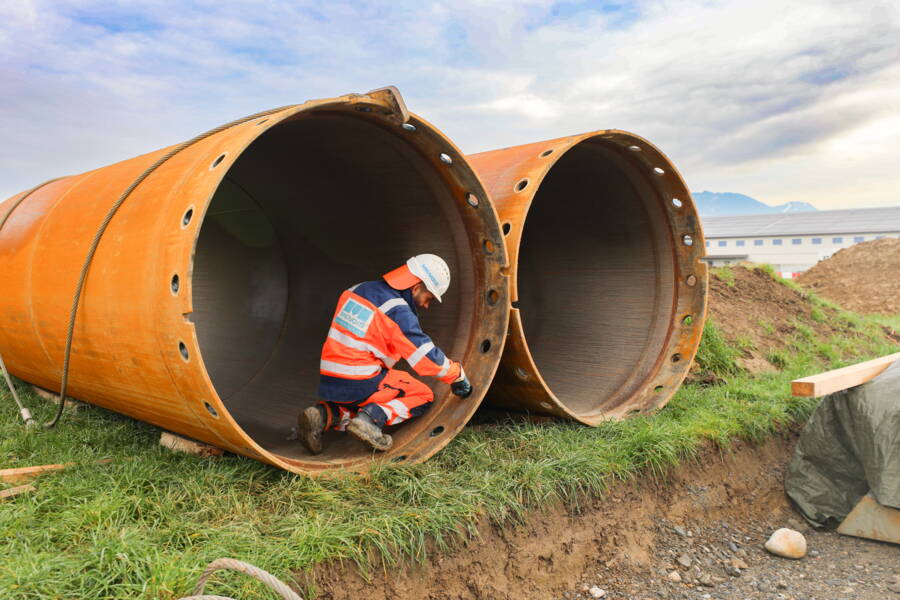
The casing pipes, and therefore the boreholes, have a diameter of 1.80 metres.
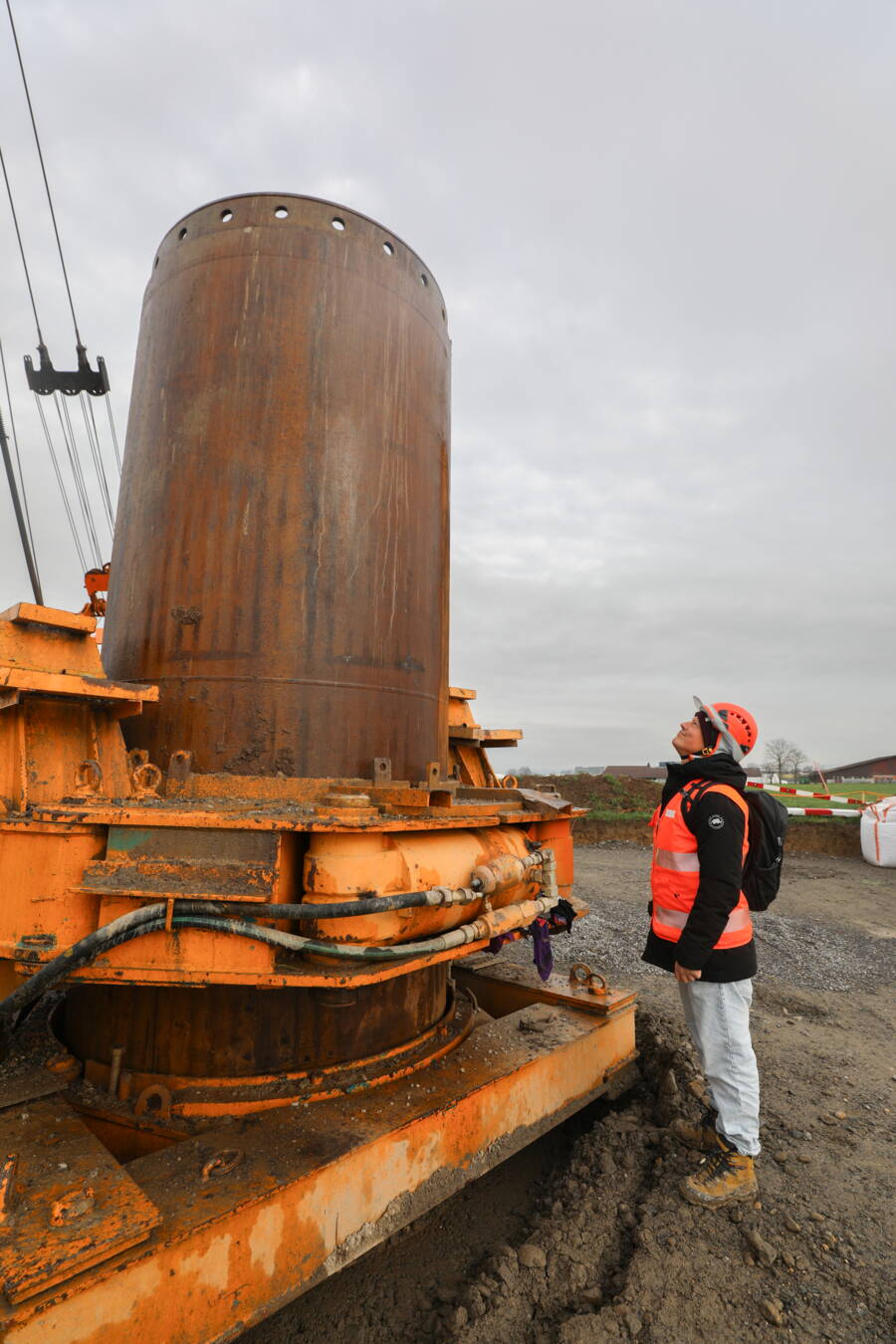
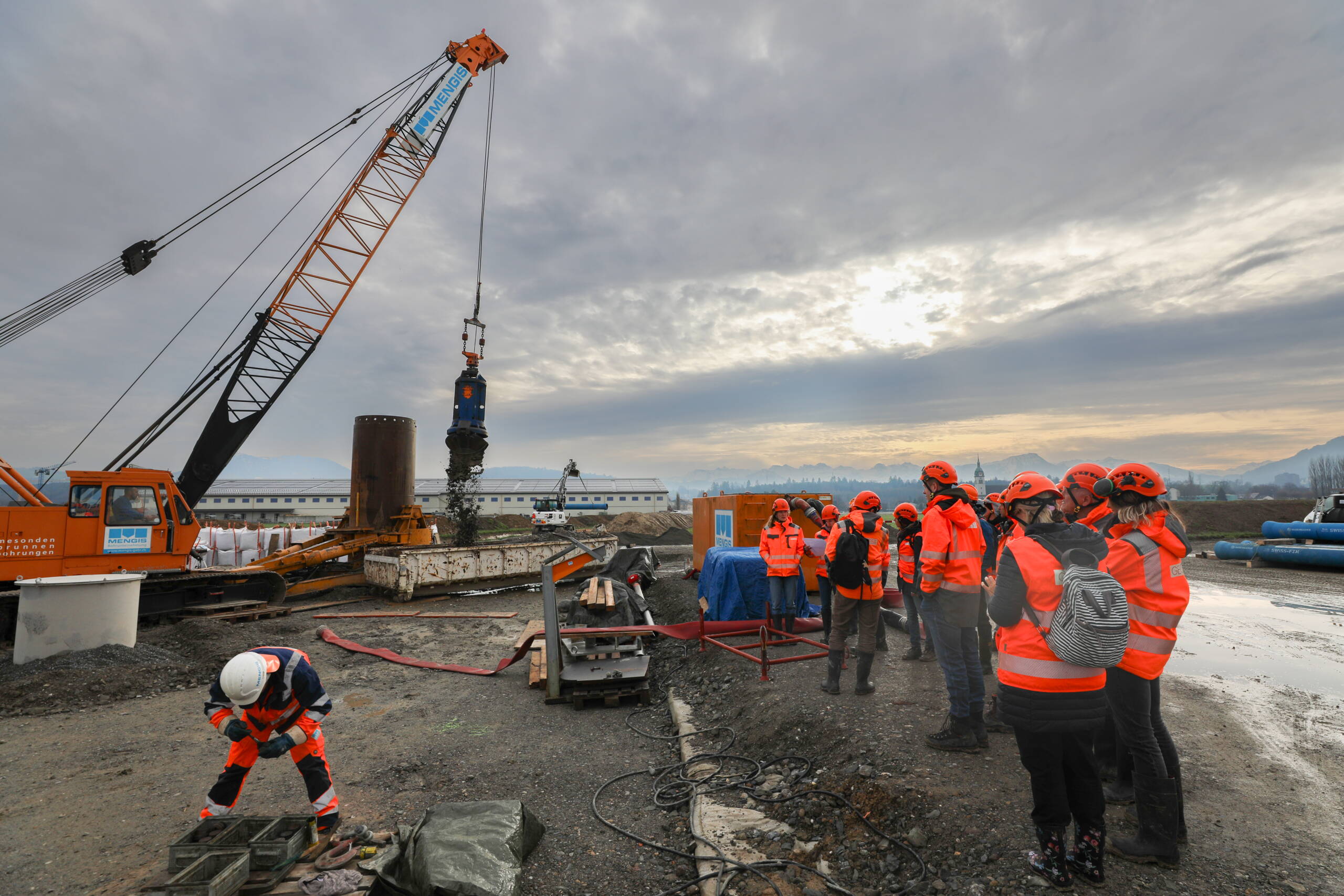
The casing pipes are driven into the subsoil using a boring machine that applies alternating rotational movements. This minimises compaction of the subsoil, ensuring that groundwater can flow unhindered to the filter once the well has been developed.
Two vertical filter wells, with a depth of around 23.5 to 24 metres, are currently being constructed. The wells have a large diameter of 1.80 metres and are equipped with modern stainless steel bridge slotted screens. The maximum flow rate of the new groundwater pumping station is up to 15,000 litres per minute.
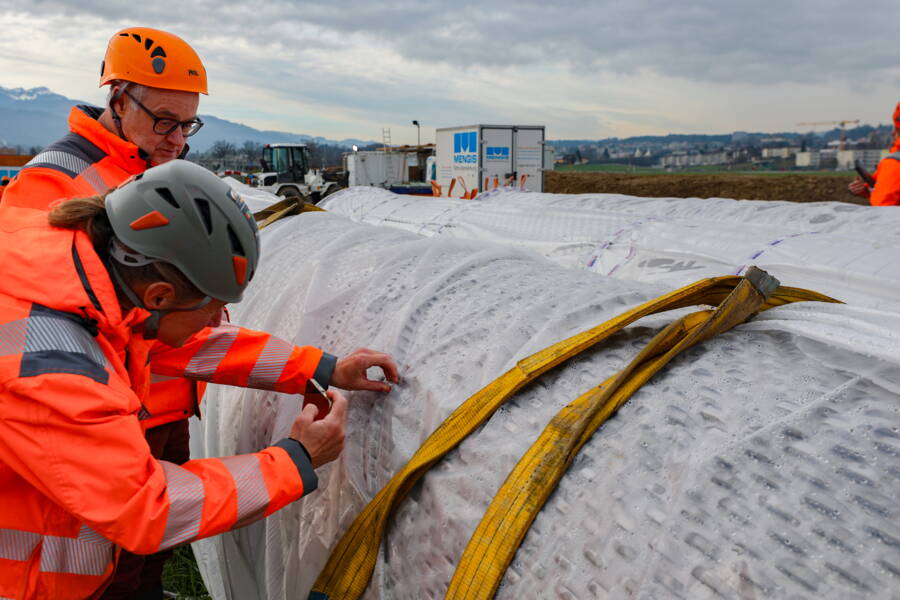
Mitarbeitende der GEOTEST begutachten einen der noch unverbauten Schlitzbrückenfiltern von Aussen.
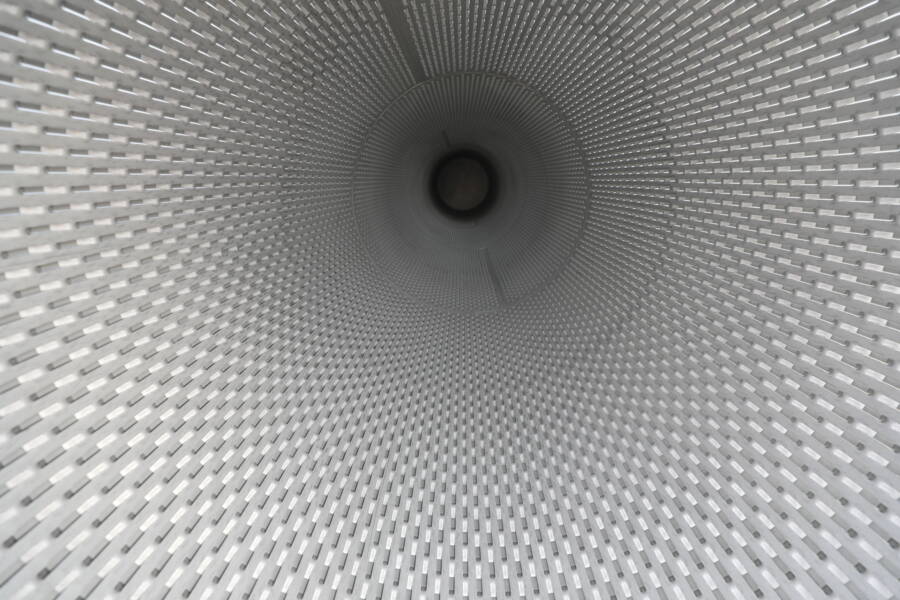
Der Schlitzbrückenfilter von Innen.
Second pillar of the drinking water supply
The most important groundwater pumping station for the Emmen water supply remains the Schiltwald GWPW, which handles most of the drinking water provision. The construction of the new Kirchfeld GWPW will specifically complement and strengthen this existing system.
In the future, Kirchfeld will serve as a second pillar of Emmen’s drinking water supply and significantly increase supply security. The new pumping station enables the replacement of the existing Stichermatt GWPW whilst ensuring that the drinking water supply for around 40,000 people is guaranteed in the long term and in compliance with current water protection regulations.
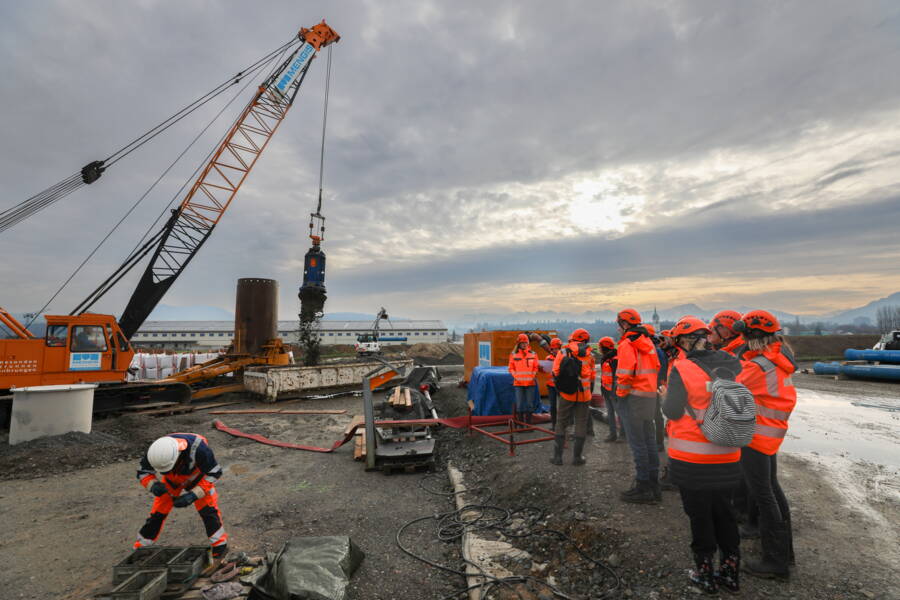
The excavated material from the boreholes for the future groundwater wells is removed during GEOTEST’s site visit.